Real Stories: How Lift Chairs Changed Lives for Family
20/08/2026
For many seniors, falling isn't just a fear — it's a reality. According to the CDC, one in four Americans aged 65 and older experiences a fall each year, and for those who do, the most terrifying part often isn't the fall itself. It's being stuck on the floor, unable to get back up.
That's where a floor lift chair comes in. Unlike a traditional recliner or standard lift chair that only helps with standing from a seated position, a floor lift chair is specifically designed to meet users at ground level and raise them safely to a sitting or standing height. No yanking. No straining. No waiting for someone to come help.
In this guide, we'll cover everything you need to know about floor lift chairs — what they are, how they work, how to choose the right one, and exactly how to use one step by step.
When most people hear "lift chair," they picture a plush recliner that tilts forward. Those are great for everyday use, but if someone has already fallen, a recliner isn't going to help.
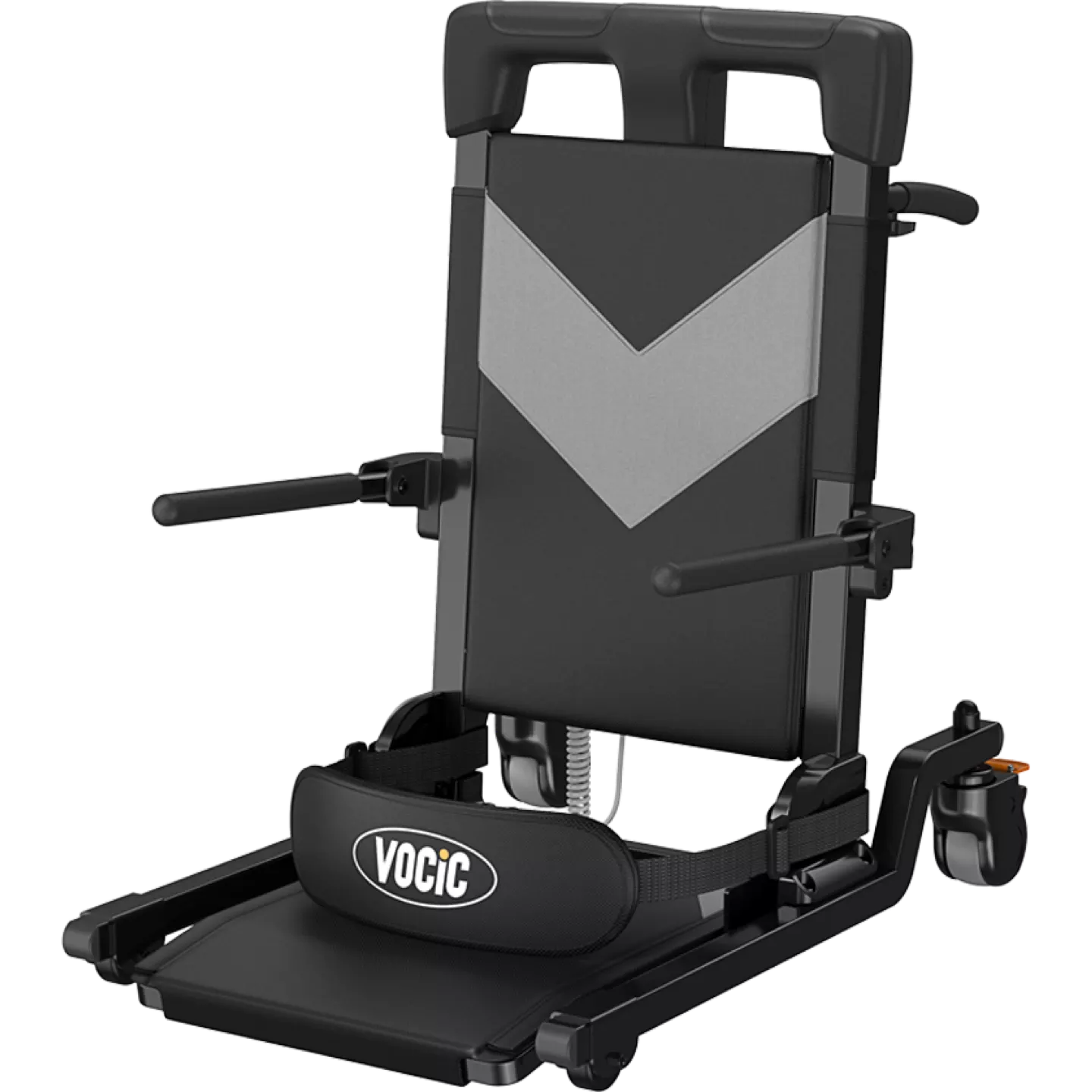
A floor lift chair is a powered mobility device that starts at floor level — as low as 2.3 inches off the ground — and uses a quiet electric motor to gradually raise the user to a comfortable sitting or standing position. It's built for one specific, critical job: getting someone up from the floor safely, with dignity, and without requiring heavy lifting from a caregiver.
These devices are essential for:
A floor lift chair doesn't just solve a logistical problem — it restores independence. No more crawling to reach a phone. No more lying on the floor, waiting for someone to notice. With the right device, a moment of helplessness becomes manageable.
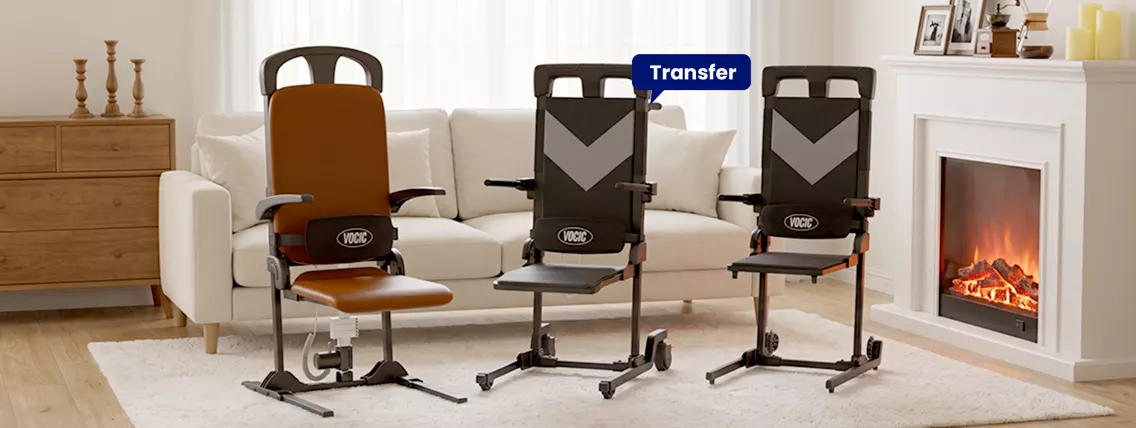
Not all floor lift chairs are built the same. The right choice depends on who's using it, how much they weigh, and whether the chair needs to move between rooms. Here's a look at three purpose-built models, each designed for a different situation.
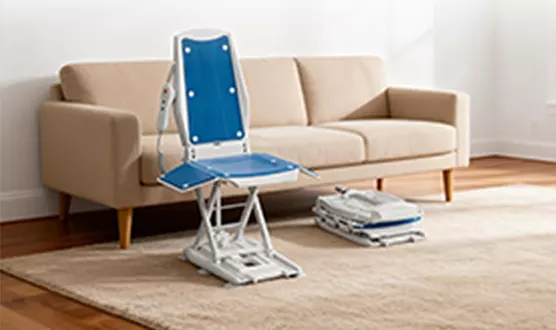
The AX25 is designed with women and lighter-frame seniors in mind. It's the most compact model in the lineup, built around an ultra-portable philosophy: easy to move, simple to store, and light enough that a single caregiver can reposition it without strain.
The AX25 is ideal when floor space is tight, when the caregiver is also elderly or petite, or when the chair needs to be tucked away between uses. Its compact footprint makes it well-suited for apartments and smaller homes.
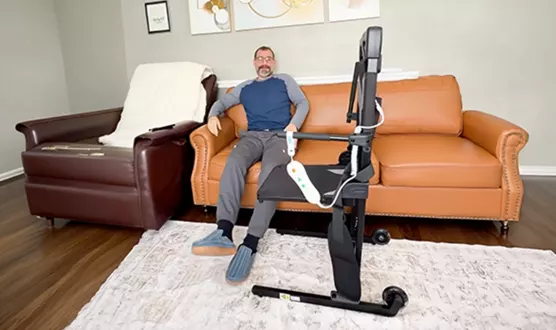
The AX35 takes a different approach. Instead of being moved to the person, it's designed to move with the person. Equipped with four smooth rollers and a secure braking system, it functions as both a floor lift and a short-distance transport chair — gliding from bedroom to bathroom, from living room to dining area, without ever needing to lift the user out and back in.
The AX35 shines in homes where the person frequently needs to move between rooms — for example, from the bedroom to the bathroom each morning, or from a living room recliner to the dining table. Instead of multiple transfers (floor → lift chair → standing → walker → destination), it consolidates the process: floor → lift chair → roll directly to the destination.
The AX15 is the powerhouse of the lineup. When weight capacity is the primary concern — or when you simply want the sturdiest, most stable option available — this is the model to choose.
The AX15 is the right choice for bariatric users, for anyone who prioritizes maximum stability, or for caregiving situations where the person being lifted has very limited ability to assist in the process. The safety belt and armrests provide an extra layer of confidence that lighter models don't offer.
| Feature | AX25 | AX35 | AX15 |
|---|---|---|---|
| Weight capacity | 350 lbs | 350 lbs | 440 lbs |
| Chair weight | 32 lbs | — | — |
| Ground clearance | 2.3" | 2.3" | 2.5" |
| Max lift height | — | 20" | 22.2" |
| Wheels | 2 large rear | 4 casters + locks | Bottom wheels |
| Room-to-room transfer | Tilt and roll | Roll while seated | Reposition when empty |
| Safety belt | No | No | Yes |
| Best for | Compact spaces, lightweight users | Daily transfers between rooms | Bariatric / max stability |
Regardless of which model fits best, keep these universal factors in mind:

Whether you're a caregiver helping a loved one or a senior preparing to use the device independently, following the correct procedure ensures a safe, comfortable experience every time.
Before doing anything, check whether the person is injured. Ask if they feel pain anywhere — especially in the head, neck, back, or hips. Look for visible signs of injury like swelling or bruising. If there's any suspicion of a serious injury, call for medical help rather than attempting to lift.
Move the floor lift chair close to the person. Make sure it's on a stable, flat surface. If the chair has wheels, lock them to prevent any movement during the transfer.
Gently roll the person onto their side. Guide them into a seated position on the floor. Make sure they feel stable and aren't dizzy or disoriented before continuing. If extra support is needed, consider using a transfer belt to help them balance.
Position the lift chair behind the person so they can rest comfortably against it. If the chair has a recline feature, lower it to make the initial boarding easier.
Make sure the person is centered on the seat. Fasten the safety belt if available. Use the remote control to gradually raise the chair. Maintain a slow, steady pace — there's no rush. Keep one hand available for extra stability if needed.
Once raised to the appropriate height, offer your hand or a walker to help them stand. If they're not ready to stand, adjust the chair to a comfortable resting position. Give them time to adjust before moving around.
Check for any discomfort or dizziness. Encourage them to rest for a few minutes before walking. If they show any signs of serious injury — severe pain, confusion, difficulty moving — seek medical attention.
A floor lift chair is the most practical solution for fall recovery, but it works even better as part of a broader safety system. Other tools to consider:
Having a floor lift chair is essential preparation, but preventing falls in the first place is equally important. Here are practical steps:
Falls happen. But being stuck on the floor doesn't have to be the outcome. A purpose-built floor lift chair gives seniors the ability to recover from a fall independently — or with minimal help from a caregiver — safely, comfortably, and with their dignity intact.
The right model depends on your situation: the AX25 for compact, lightweight portability; the AX35 for daily room-to-room mobility; or the AX15 for maximum weight capacity and stability. All three share the same core mission — getting someone off the floor without strain, without panic, and without a call to 911.
For families, it means peace of mind knowing that if a fall occurs at 2 AM when no one is around, their loved one has a way to get back up. Whether you're a senior looking for independence or a caregiver looking for relief, a floor lift chair isn't a luxury. It's a lifeline.