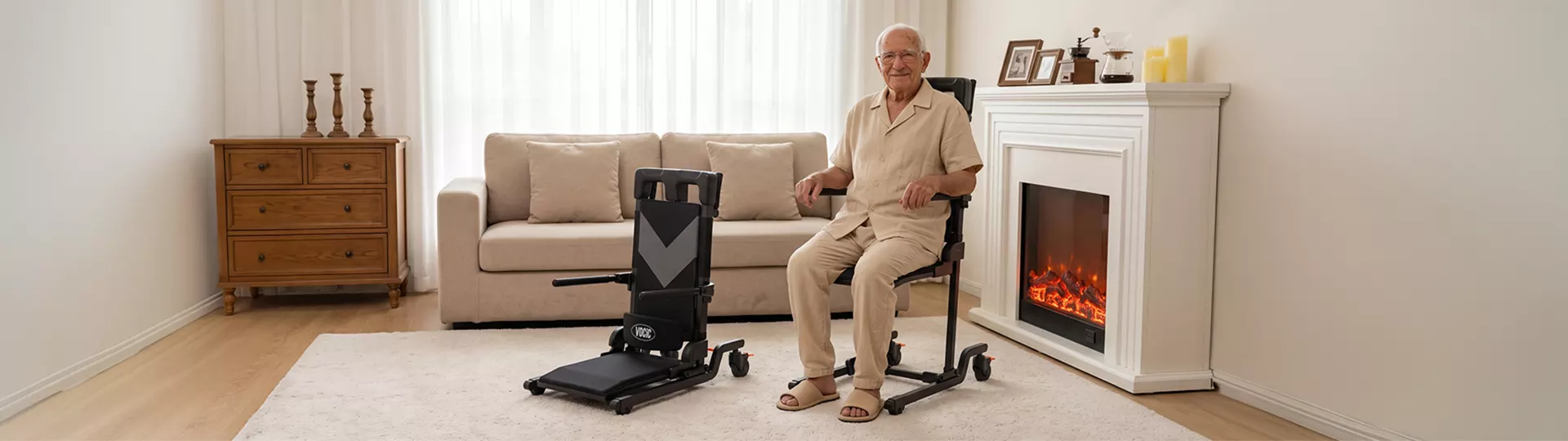
Floor Lift Chairs: How to Help Seniors Get Up After a Fall
20/08/2026
When we talk about lift chairs, it's easy to get caught up in specifications — weight capacity, battery life, waterproof ratings. But the real measure of any mobility device is the difference it makes in someone's daily life.
These are real stories from real families who found that a lift chair wasn't just a piece of equipment — it was the thing that gave them back their independence, their confidence, and in some cases, saved them from a trip to the emergency room.
Marian Boscia's husband has advanced progressive MS. Transferring from his wheelchair to his recliner is something most of us do without thinking — but for him, it's a high-risk moment every single time.
One day, it went wrong. He fell while trying to make the transfer and ended up on the floor. With advanced MS, he didn't have the strength to sit up on his own, let alone stand. In the past, this would have meant calling 911 and waiting for paramedics — an experience that's not just inconvenient but deeply distressing for someone who already struggles with losing independence.
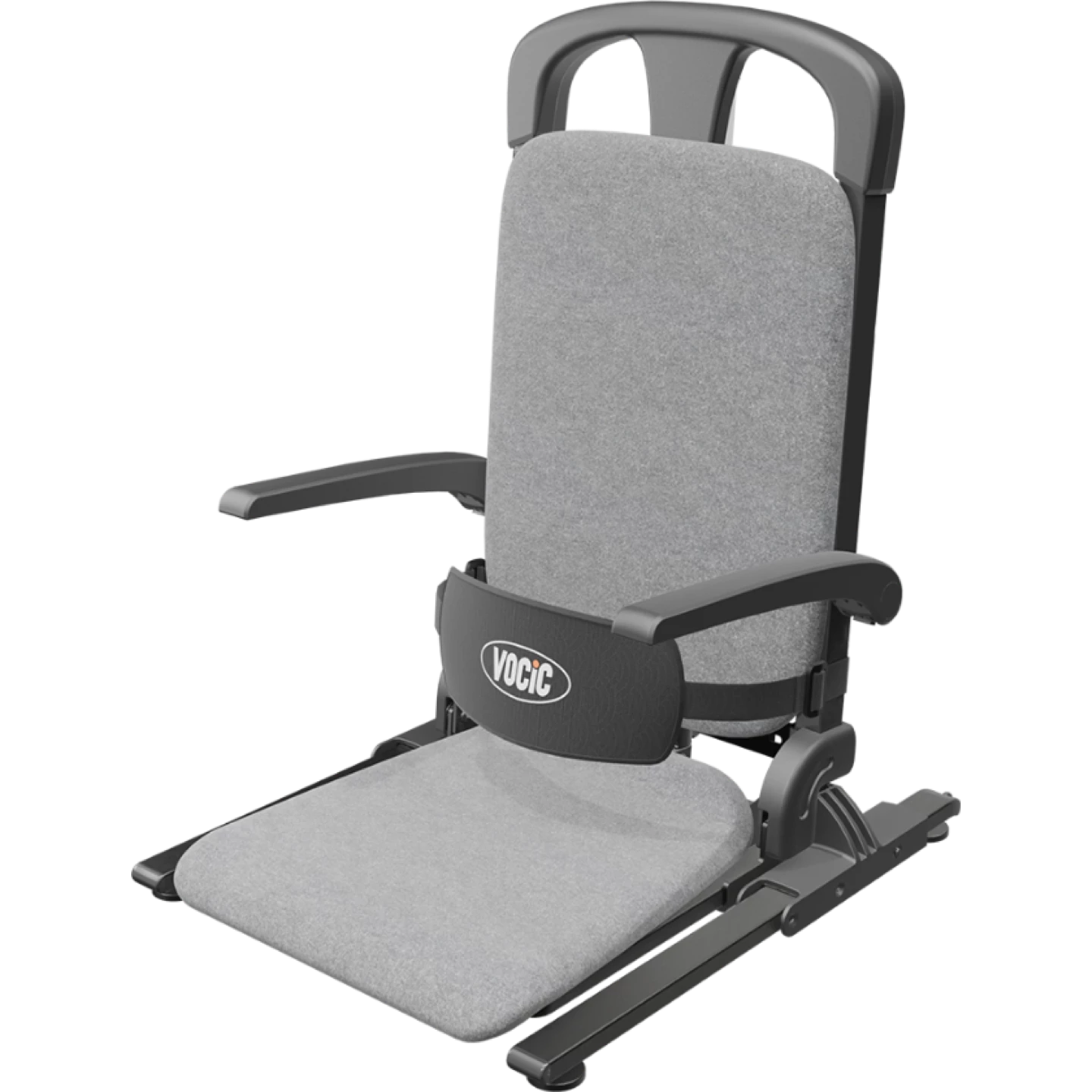
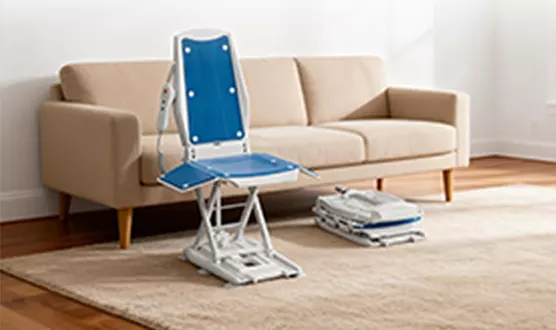
This time was different. Marian had a VOCIC lift chair. She was able to roll her husband onto his side, slide the lift underneath him, and use the powered lifting mechanism to raise him to a seated position. From there, she got him safely back into his wheelchair.
No paramedics. No ambulance. No hours spent on the floor waiting for help. Just a wife and a well-designed device solving a crisis in minutes.
What makes this story particularly powerful is what it reveals about the real value of a floor lift chair: it's not just for the person who falls. It's for the caregiver who would otherwise face an impossible physical task — or be forced to call emergency services for a situation that, with the right equipment, can be handled at home.
Malissa Mckeith's mother broke her hip a year ago. After surgery and rehabilitation, she was recovering well — but one thing she couldn't do anymore was swim. There was simply no safe way to get in and out of the pool.
For someone who had always loved swimming — both for exercise and for the sheer joy of it — losing that ability was a significant blow to her quality of life. It wasn't the hip that kept her out of the water. It was the lack of a safe way to manage the transition.
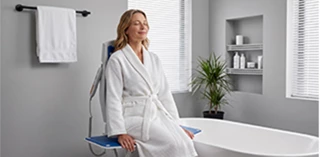
Malissa discovered the VOCIC bath lift chair through her own online research. The waterproof design and weight capacity meant her mother could use it to safely enter and exit the pool — the same way it's designed to work in a bathtub, but adapted to a completely different setting.
The result? Her mother was back in the pool.
But what struck Malissa most wasn't the product itself. It was the fact that none of her mother's doctors — not the orthopedic surgeon, not the physical therapist — had ever mentioned that a device like this existed. A year of unnecessary limitation, resolved by a piece of equipment that had been available the entire time.
Her message to other families: don't wait for a healthcare provider to bring it up. If someone you love has lost the ability to do something they enjoy because of a mobility limitation, look into the solutions yourself.
Eunice is a professional caregiver who looks after her elderly mother. She spends her days in healthcare settings where fall protocols are well-established — but at home, the situation is different. There's no team of nurses on standby. No ceiling-mounted Hoyer lift bolted to the wall. Just one caregiver and one elderly parent.
After experiencing a minor slip-and-fall incident with her mother, Eunice decided to invest in a lift chair with a waterproof design and high weight capacity. Her reasoning was practical: as a nurse, she knew that the physical mechanics of lifting a fallen person alone are a recipe for back injury. The device eliminated that risk for both of them.
What she appreciated most wasn't a specific feature — it was the peace of mind. Knowing that if her mother fell while she was in another room, she had a reliable, tested way to get her back up safely without straining her own body or calling for backup.
For professional caregivers and family caregivers alike, the physical toll of manual lifting is one of the least-discussed aspects of the job. A lift chair doesn't just protect the person being lifted — it protects the person doing the lifting.
Beyond the dramatic moments — the falls, the emergencies, the close calls — there's a quieter transformation that happens when someone starts using a lift chair regularly.
The most common thing families report isn't a specific event. It's a shift in daily life. The person who had stopped taking baths because the tub felt too dangerous starts bathing again. The senior who dreaded being alone because they were afraid of falling starts feeling confident enough to stay home without constant supervision.
This isn't just about physical safety. It's about psychological freedom — the knowledge that if something goes wrong, there's a way to handle it.
Caregiving is physically demanding work. Helping someone stand, transferring them between surfaces, lifting them after a fall — these tasks take a toll on the caregiver's body over time. Back injuries are the most common occupational hazard for both professional and family caregivers.
A lift chair doesn't eliminate the need for caregiving. But it removes the single most dangerous task: the heavy lift. When a 130-pound caregiver no longer has to physically lift a 200-pound family member off the floor, the equation changes entirely.
This is the part that doesn't show up in product specifications but matters more than anything else. Being stuck on the floor, waiting for help, is humiliating. Needing to be physically hoisted by another person — even a loving family member — strips away a sense of personal control.
A lift chair returns that control. The person pushes a button and rises under their own direction. It's a small mechanical action, but the emotional impact is significant.
Every family we've heard from shares a similar pattern:
If you recognize your own family's situation in any of these stories, take it as a signal. The technology exists. The solutions are proven. The only question is whether you'll wait for someone to recommend it — or take the step yourself.